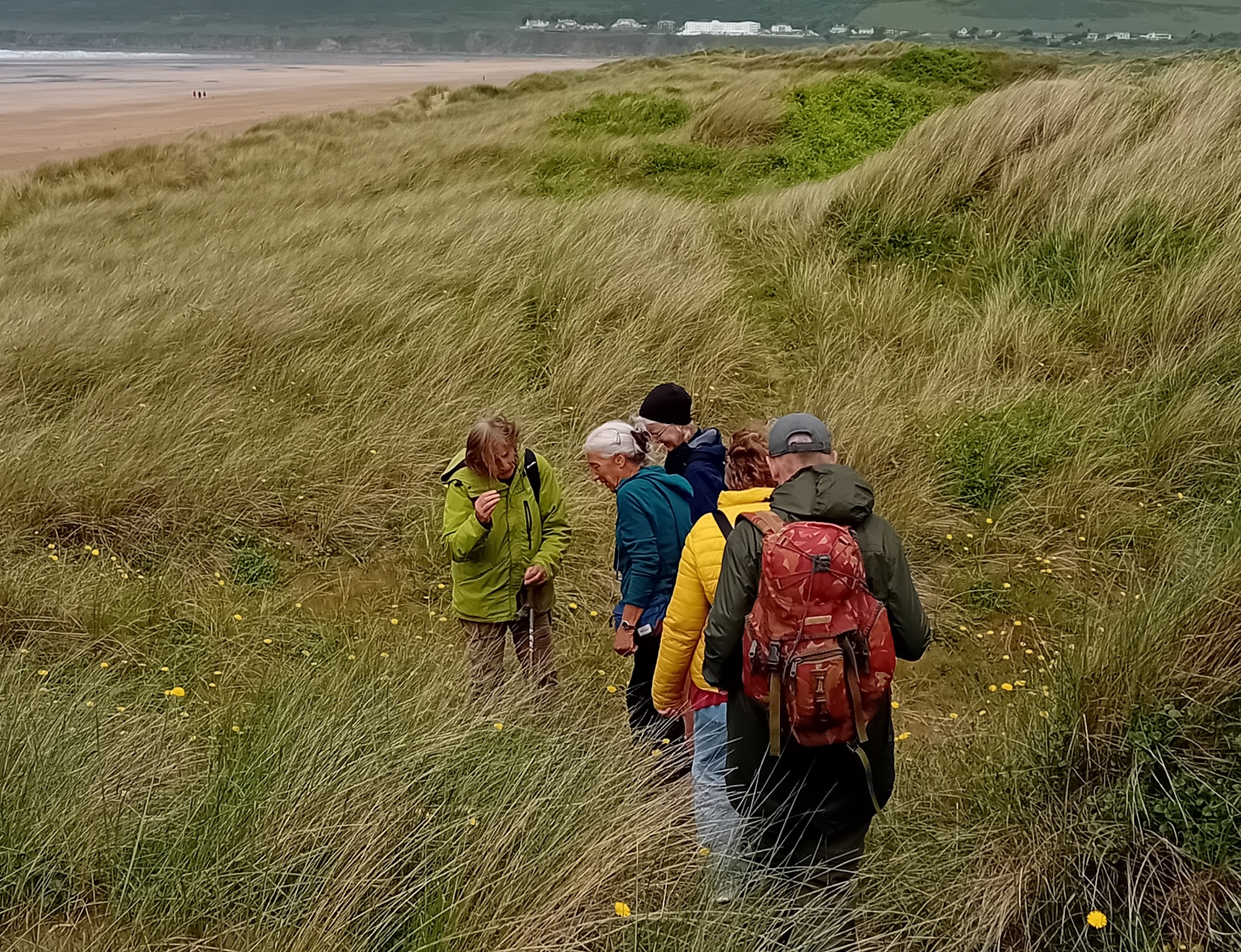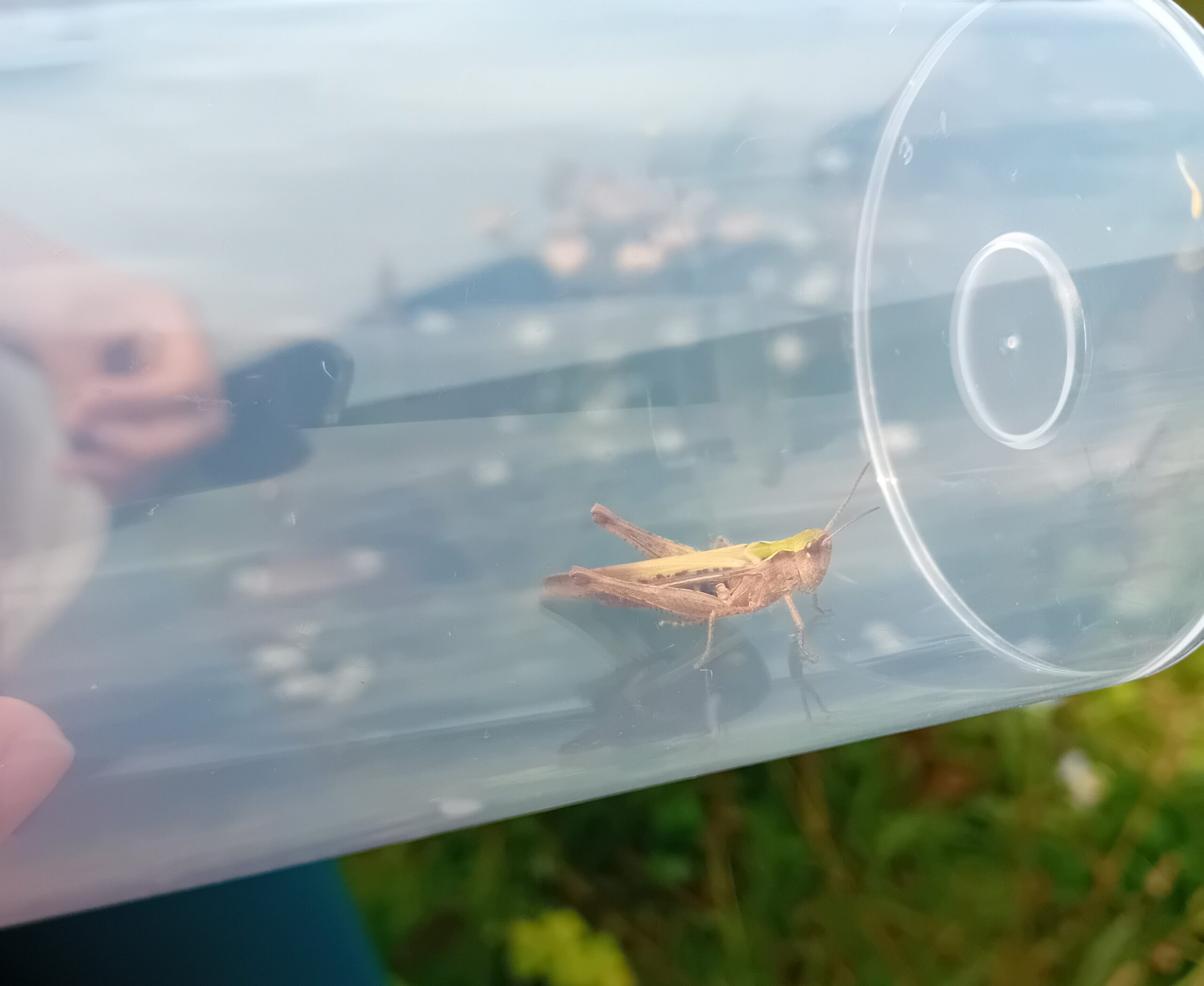
Batman hoverflies, Beautiful Demoiselles, and Ichneumon wasps were among the many bugs spotted during the Centre’s latest Bee & Bug Hunt.
On the 15th of August, led by our knowledgeable volunteer Debbie, a small group ventured out into Braunton Village to search for bugs in wildflower patches and verges. In two hours, we identified 40 species!
Citizen science in Braunton
We set out on the walk to identify and record species, particularly bumblebees, as part of the Bumblebee Conservation Trust’s BeeWalk monitoring scheme. Debbie has been identifying and recording bumblebees as part of the scheme for years, and events like the Bee & Bug Hunt are an excellent opportunity to take part in citizen science.
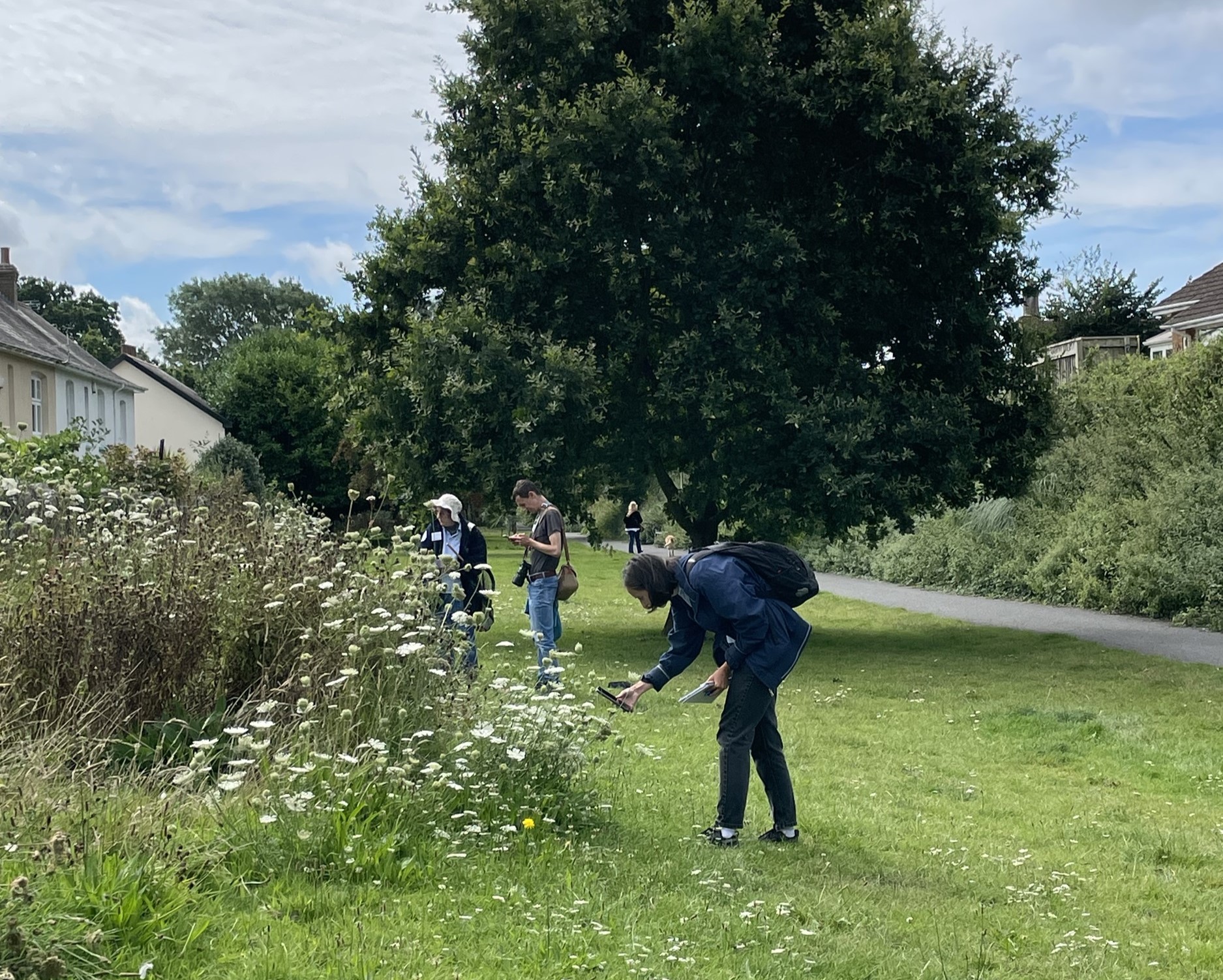
We started our search just outside the Centre in two large wildlife-friendly planters. Within minutes, a spectacular Hornet hoverfly landed! This hornet mimic hoverfly is the largest hoverfly species in the UK and, as its name suggests, mimics the vibrant colours of the European hornet. A striking insect indeed! We also spotted a Common Carder bee and a Buff-tailed bumblebee – two of the most common bumblebee species in the UK. The group then moved on to the Centre’s allotment and wildflower patch, where we found a Silver Y moth resting on the runner beans, a grasshopper, froghopper, and Cabbage White caterpillar. After a slow start to the season for butterflies, it was a relief to see a caterpillar!
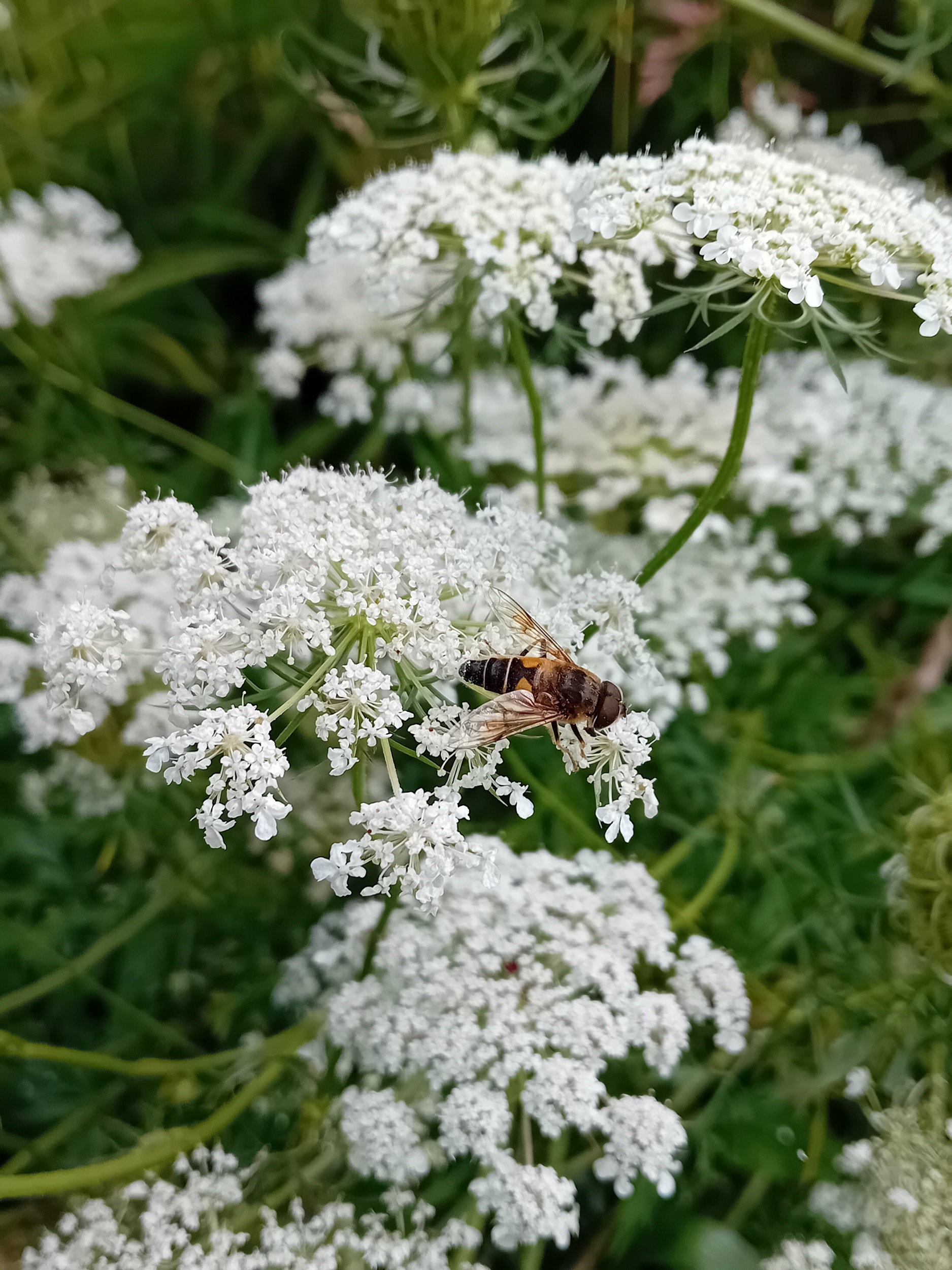
Just across the road, we visited a wildflower patch with Wild Carrot in full bloom. Although it was a windy day and slightly cloudy, we were treated to some exciting bug finds. The Batman hoverfly was one of the favourites of the day. This extraordinary hoverfly has a marking on its thorax resembling the Batman symbol. How cool is that? Closer to the ground, we spotted lots of Green shieldbug ‘instars’. Green shield bugs go through four stages of growth after the larval stage, at which point they’re known as ‘instars’, before reaching adulthood by autumn.
Nettles, brambles, and Beautiful Demoiselles
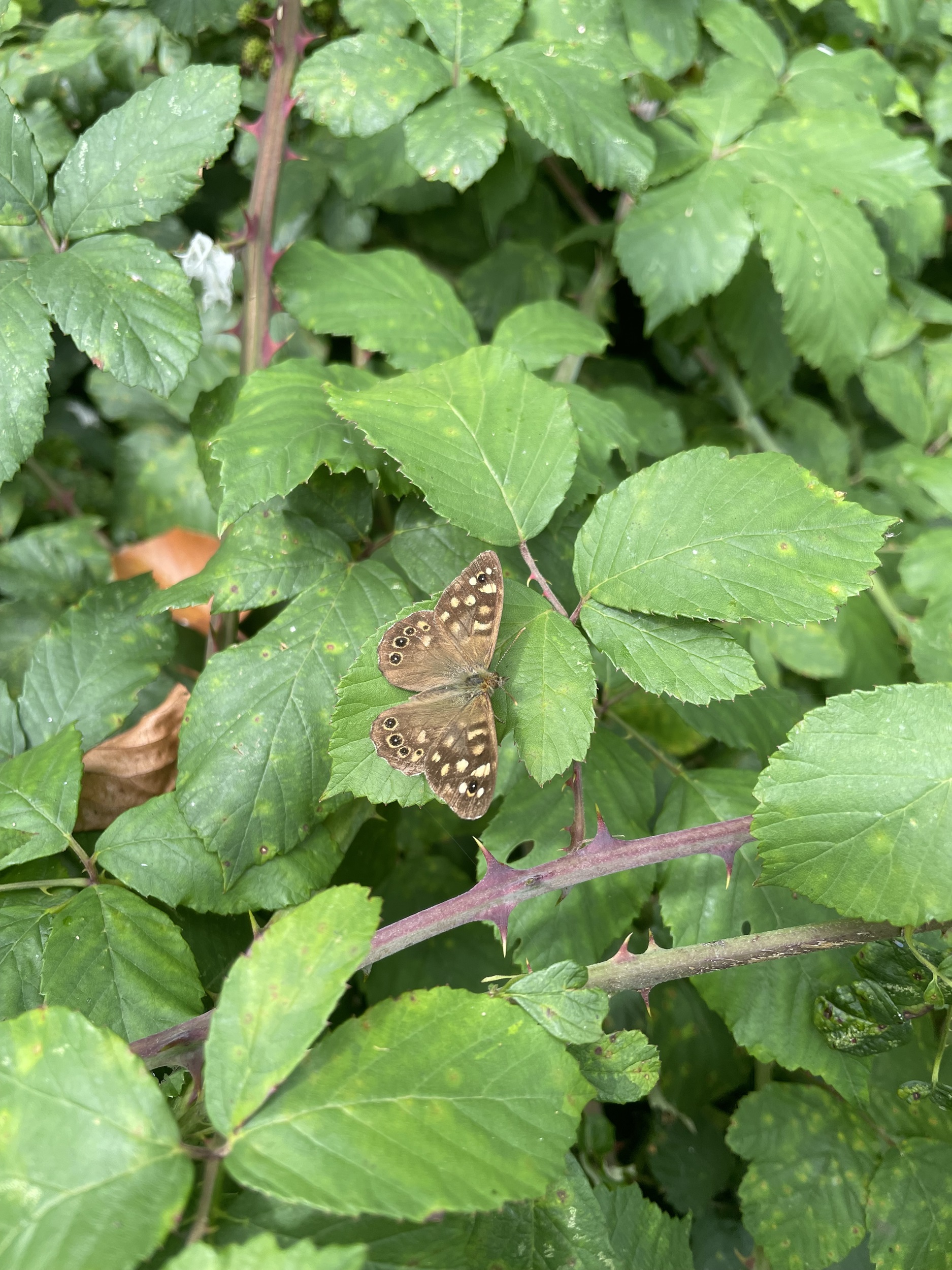
In a nearby patch of nettles and brambles, we observed spiders weaving webs and catching prey, and a resting Speckled Wood butterfly. A Harlequin ladybird larva scuttled by, and Debbie carefully placed it into an observation tub to get a closer look. Nearby, an adult Harlequin ladybird was pottering in the nettles. The sky was also buzzing with insect life! Dragonflies patrolled above us and some rested on branches high in the trees. In a moment of collective awe, a spectacular female Beautiful Demoiselle landed in front of us and stopped for a while so we could admire its iridescent green colour. We learned from one of our volunteers, Luke, that male Beautiful Demoiselles are a metallic blue colour.
Weird and wonderful wasps
We paused by the river for a moment to watch a Dipper (thank you to our Project Coordinator Jess for spotting this beautiful bird!) before continuing our walk. Although we didn’t see as many bumblebees as we expected, we encountered a few other exciting and unusual species, including two Ichneumon wasps. These stunning insects are all parasitoids and typically lay their eggs inside or on caterpillars; the larva then feeds on the host body until it is fully grown. Nature can be ruthless, but these wasps were an exciting find. Debbie also pointed out a tiny solitary bee flying along the side of the path, perhaps only 6mm in length. None of us knew solitary bees could be so small!
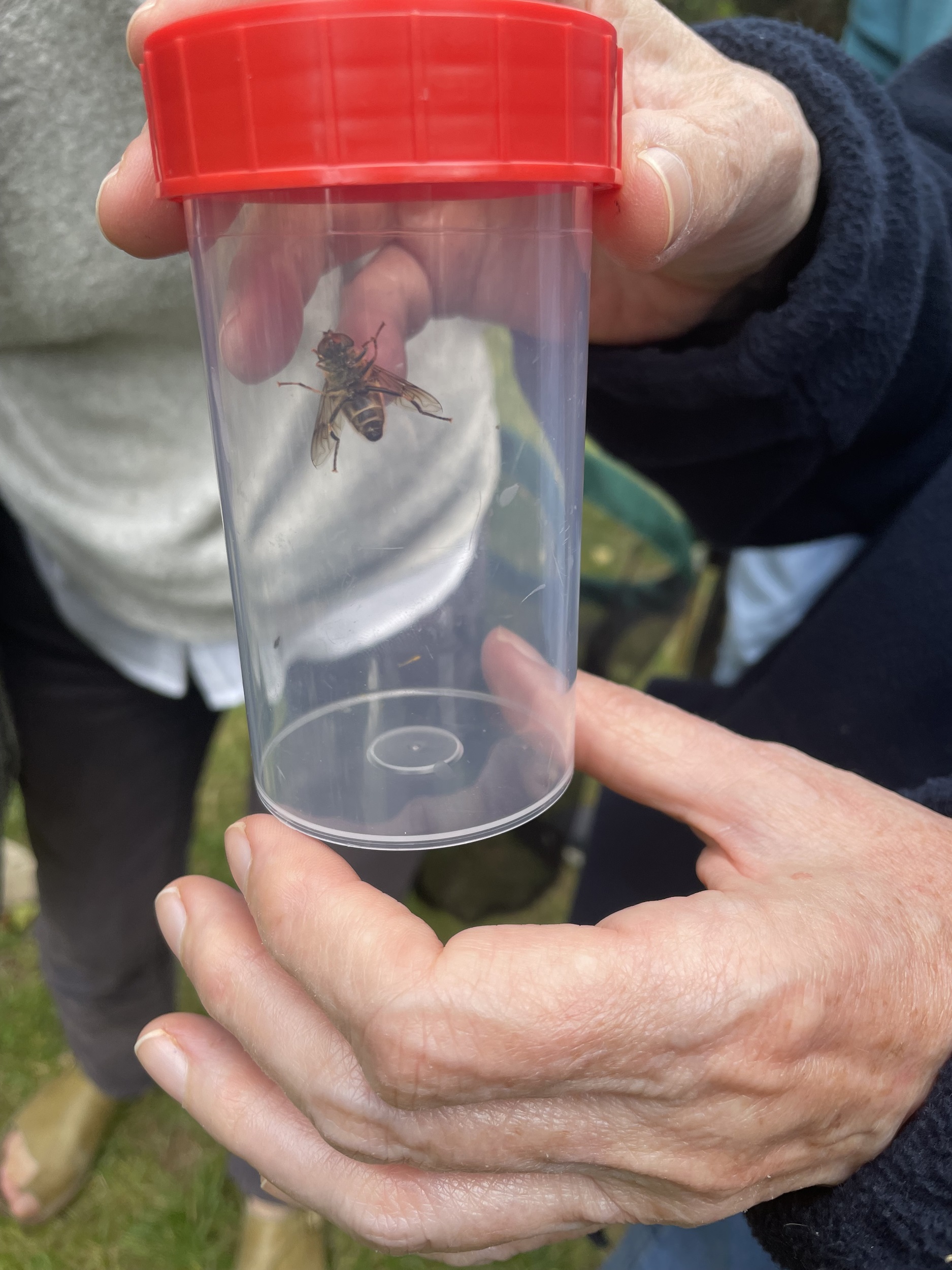
At the end of our walk, a Red Admiral butterfly and a Meadow Brown flitted by, giving the group hope that butterflies would soon be in abundance. Butterfly Conservation’s Big Butterfly Count took place between 12th July and 4th August and initial reports have revealed worryingly low numbers compared to last year. Citizen science surveys like this (and the BeeWalk) help to build a clearer picture of how certain species are faring in the UK.
Join us at our next Braunton Bee & Bug Hunt to learn all about these fascinating creatures and the important roles they play in our ecosystem! Keep an eye on our Events Calendar for more guided walks and talks.
A few fun facts about bees and bugs:
- Crickets tend to have long antennae whereas grasshoppers have short antennae
- Female bumblebees sting, but males don’t
- There are approximately 240 species of solitary bees in the UK
- Only Queen bees overwinter and hibernate alone, often underground
- The rare Brown-banded Carder bee can be found on Braunton Burrows!
- Flies like the Flesh fly help to solve crimes! Scientists can use the pupa found at crime scenes to help investigators estimate the time of death. Creepy, but cool.