
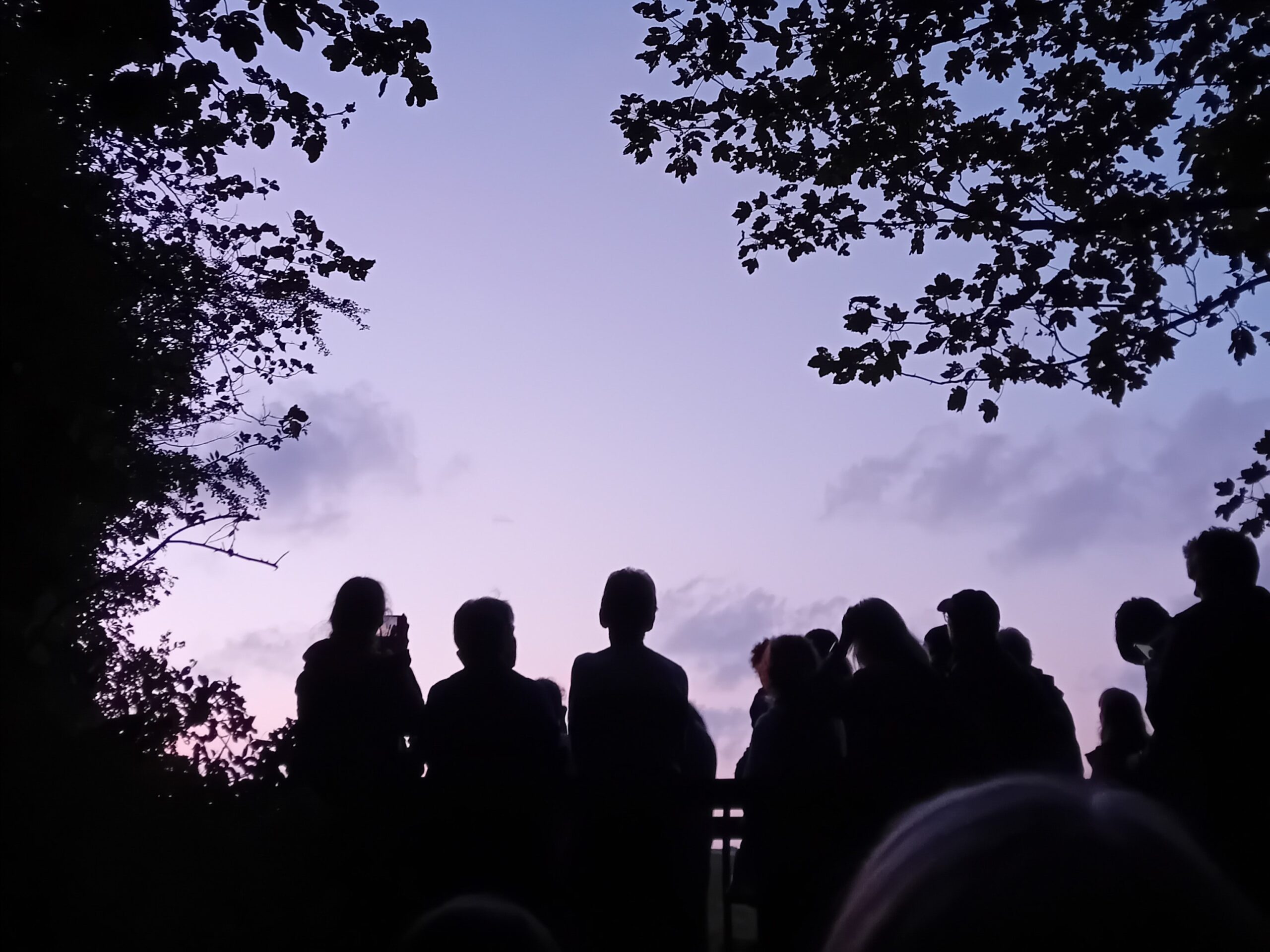
Have you ever wondered how bats navigate in the dark? To humans, the idea of traversing the landscape in total darkness and searching for food seems almost impossible. But this fascinating nocturnal creature has a unique skill – echolocation.
What is echolocation and how do bat detectors work?
All bats found in the UK produce sound waves at high frequencies that humans can’t hear, called ultrasound. The sound waves bounce off objects in their environment, helping them to navigate and find food, such as moths. This process is called echolocation. Contrary to popular belief, bats are not blind; many bat species have better eyesight than humans! However, echolocation allows bats to navigate and source food more precisely in complete darkness.
Bat detectors work by converting the high-frequency calls to a frequency that we can hear. With a heterodyne bat detector (like the ones we use on our bat walks) simply tune in to the right frequency – might we recommend Pipistrelle FM or perhaps Greater Horseshoe Hits? – and wait for the bats to arrive.
Searching for bats in Braunton
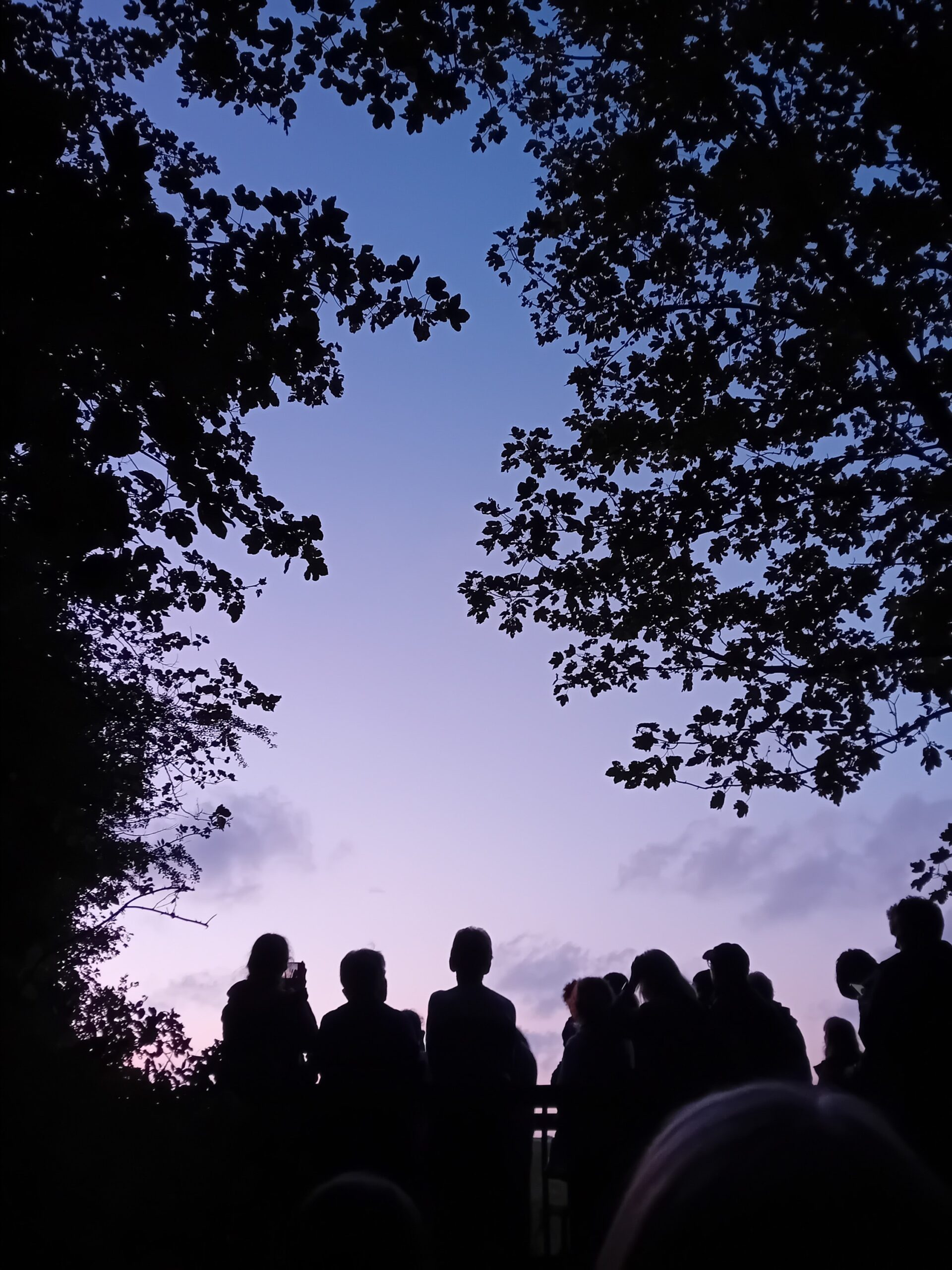
On the 29th of August, 38 wildlife enthusiasts and volunteers gathered at the Centre for bat walk, led by volunteers and ecologists Mary and John Breeds, and the North Devon Coast National Landscapes team. Before we set off, John passed around observation pots containing a variety of moths! Often overlooked, moths are truly spectacular insects, and an important food source for bats. John released a Yellow Underwing moth outside so we could marvel at its spectacular colours as it disappeared into the evening sky.
Armed with bat detectors, we set off for Braunton Beacon. At the top of the Beacon, nestled among the trees, is a bat viewing platform built by the Devon Greater Horseshoe Bat Project. On the way, we paused at a community wildflower patch, as Mary highlighted the importance of creating habitats for insects to provide a food source for local wildlife. The Common Pipistrelle – the UK’s smallest bat – can eat over 3,000 midges in one night!
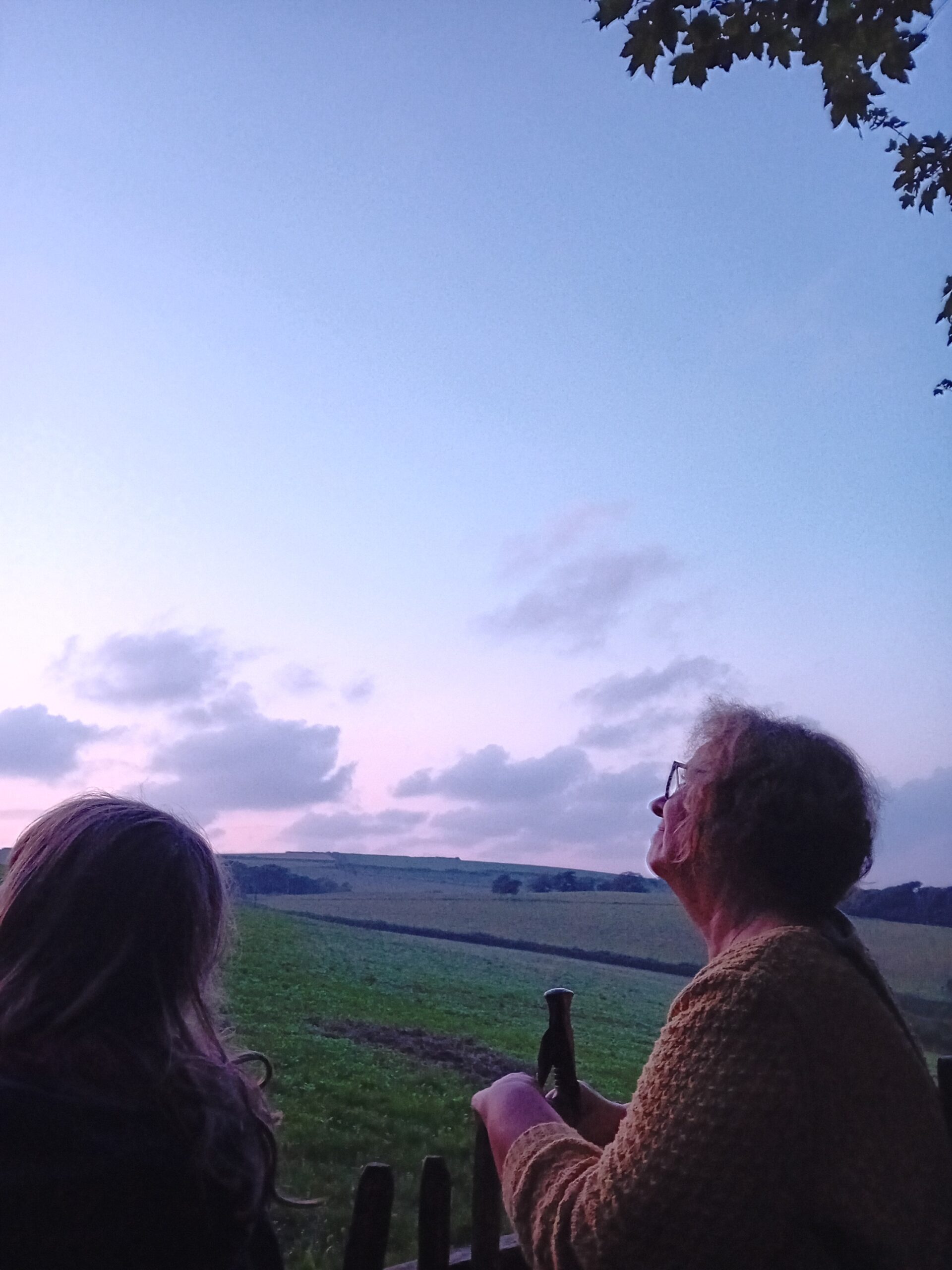
After a short and steep ascent to the Beacon in the cool evening air, we waited patiently on the viewing platform for the bats to arrive. The group glanced up at the sky and down at their heterodyne bat detectors, waiting for the signal. Suddenly, we heard the iconic clicking sound of the bats’ echolocation calls. They had arrived!
With the help of our knowledgeable guides, we learned that the bats soaring overhead were Common Pipistrelle and Noctule bats. While Common Pipistrelles are the smallest in the UK, weighing around 5 grams (the same as a 20p coin), Noctule bats are the largest species and can weigh up to 40 grams! We watched the bats silhouetted against the sunset, hunting for food over the fields.
Discovering the Daubenton’s bat
At the viewing platform, shortly after the Common Pipistrelles and Noctule bats arrived, we were fortunate to hear a Greater Horseshoe bat, and the more sophisticated equipment picked up the call of a Lesser Horseshoe bat. Result!

After this incredible experience, the group carefully descended from Braunton Beacon, back into the village towards St. Brannock’s Church. Overlooking the River Caen, the bat detectors began picking up more calls, this time from a different bat species. The Daubenton’s bat, also known as the water bat, hunts for aquatic insects. We stopped for a while to watch these remarkable creatures skimming the surface of the river, before retreating under the bridge below our feet to roost. One of the group commented: “I honestly did not expect to see so many bats! It’s amazing to know that they’re here in the village.” It felt as though we’d discovered a secret world.
It was a joy to see all the families in our group getting stuck into bat detecting. The children were mesmerised by the echolocation calls and their eyes lit up when the bats soared overhead. Our mission is to help people connect to nature and increase awareness and enjoyment of our precious local landscapes, and the bat walk certainly achieved that! Thank you to everyone who joined us for this special event. We are incredibly grateful to our volunteers and the National Landscapes team for leading this walk and creating an unforgettable experience.

If you would like to come along to one of our guided walks, talks, or activities, keep an eye on our Events Calendar and social media. If you would like to search for bats in your own time, you can also follow the Braunton Bat Trail!
Did you know?
- Bats are the only true flying mammal
- Moths, midges, mosquitoes, and other flying insects are bats’ primary food source
- Greater Horseshoe bats can live for up to 30 years!
- During the day, bats roost in dark places such as roof spaces, trees, or old buildings
- By planting night-scented flowers in your garden and creating a small pond, you can attract flying insects to provide food for bats