Did you know that swifts eat, sleep, and breed on the wing (while flying)? These fascinating birds are summer visitors to the UK, travelling around 3,400 miles from Africa to breed. Swifts pair for life and meet at the same nesting site each year. Sadly, swifts are increasingly struggling to find suitable nesting sites, and so these beautiful birds are now endangered in the UK.
To raise awareness of swifts, on the 25th of July, the Braunton Countryside Centre hosted its second Swift Nest Box workshop and an evening swift walk.
Building nest boxes for swifts
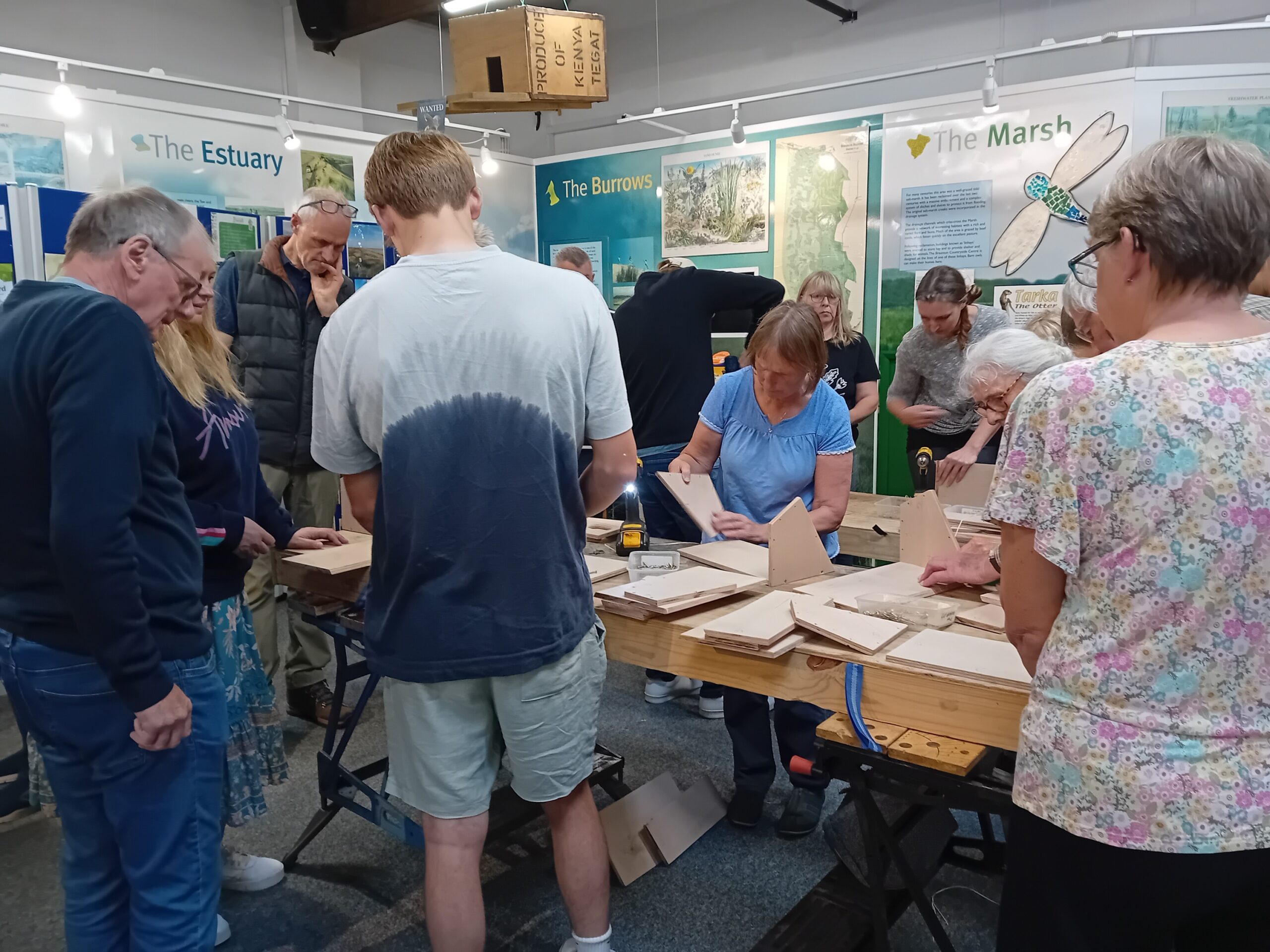
We were delighted to welcome so many swift enthusiasts to our workshop, which was kindly supported by the Braunton Community Men’s Shed. After an introduction by the Men’s Shed, suddenly the Centre was buzzing with the sound of power tools. All the components of the wooden nest boxes were clearly labelled and laid out on the workbenches, ready for assembly under the supervision of the Men’s Shed team. Within an hour, the group had made 18 nest boxes!
 “I used to see swifts all the time on Church Street and in recent years, I’ve been wondering where they’ve all gone,” said Keith from Braunton. “I decided to come along to the workshop because I have a perfect spot on my house for a swift nest box and I wanted to help. It’s time to give back.”
Top tips for your swift nest box:
- Hang your nest box around 3 metres high
- Paint your nest box in a contrasting colour, so that the entrance hole is clearly visible
- A white roof is recommended to help reflect sunlight from the nest box
- If your nest box does not sit directly under the eaves of the building, it should be designed with a sloping roof to deter predators.
An evening swift walk in Braunton
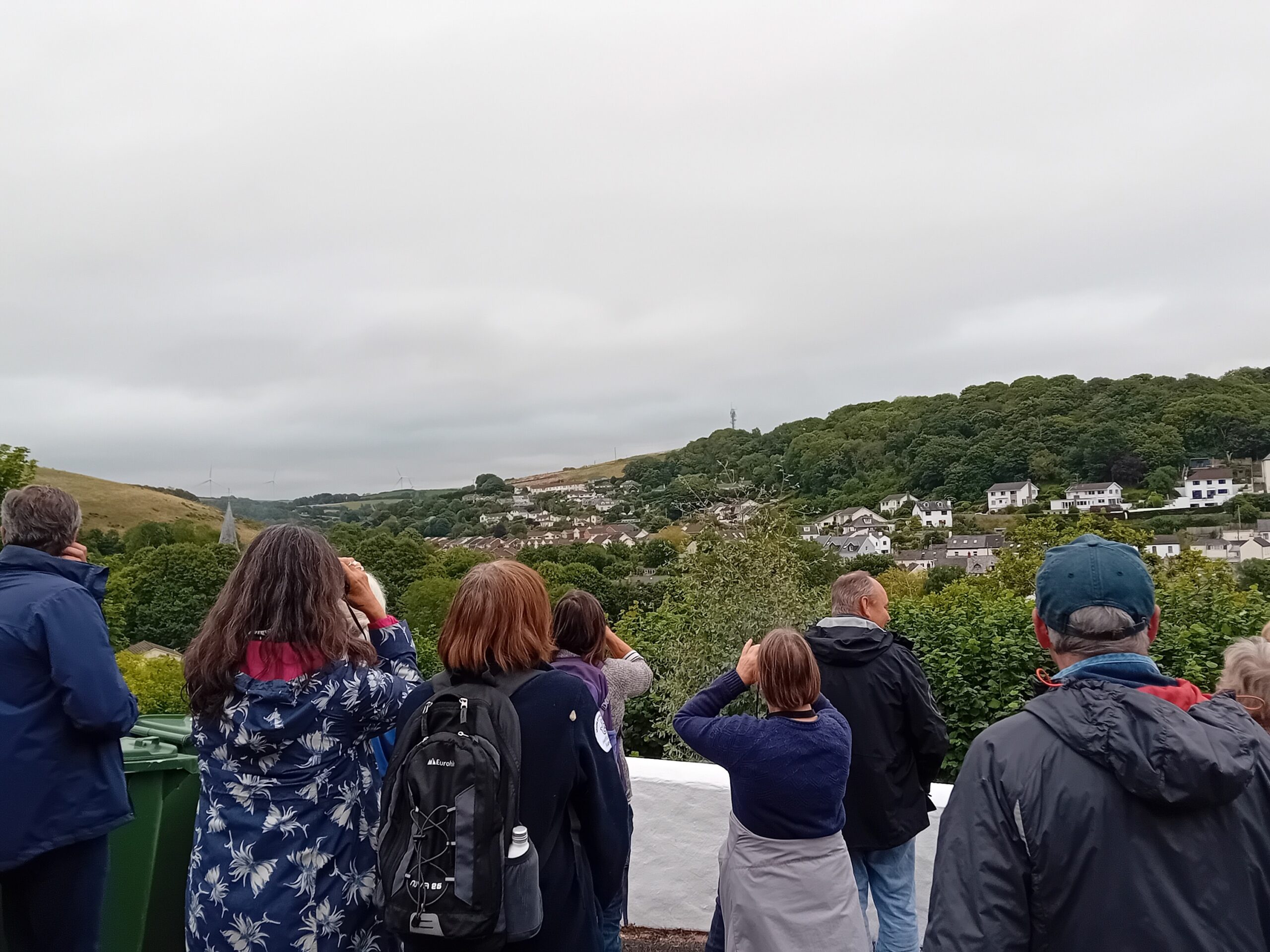
At 8pm, we gathered outside the Centre with Chris, Ann, and Vivien from the Chulmleigh and District Swift and House Martin Conservation Project to set off on a guided walk through Braunton Village. Just before we left, we spotted two swifts soaring overhead, identified by their classic anchor-shaped silhouettes! A promising sign.
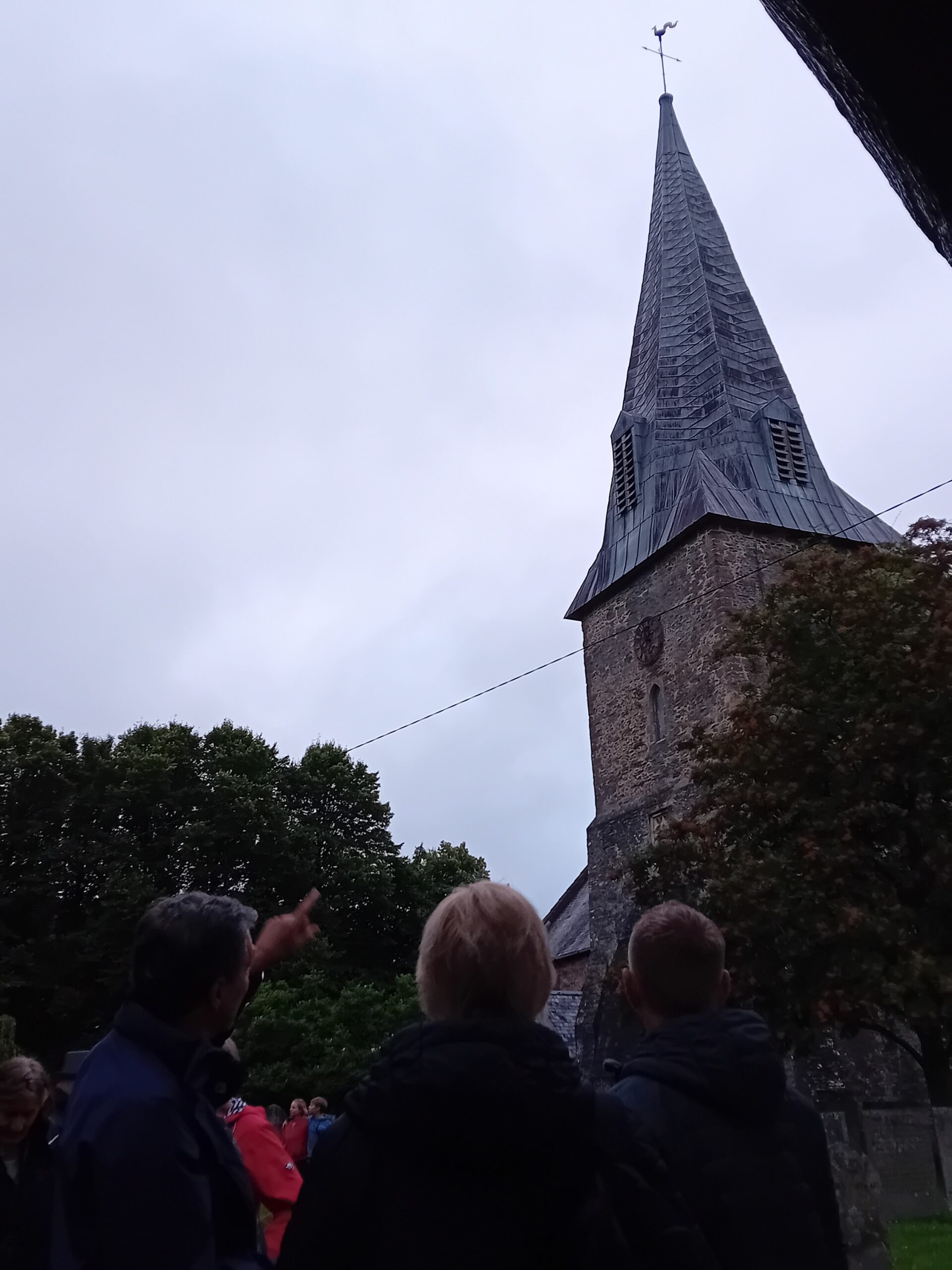 The gentle walk took the group through picturesque residential streets to various viewpoints. Armed with binoculars and heaps of enthusiasm, the group soon spotted House Martins sweeping through the skies. At the first viewpoint, we looked down onto St Brannock’s Church, where swift nest boxes will soon be installed. Swifts typically rely on holes and crevices in old buildings to build their nests. Sadly, as many old buildings are ‘tidied up’ or renovated, these ideal nesting spots are lost. Swift nest boxes create more opportunities for these magnificent birds to breed locally.
We wandered to the churchyard to continue our search and briefly paused by the river, where a fish leapt out of the water, pond skaters darted across the surface, and a playful cat stopped to greet the group. We continued our walk through the churchyard and spotted a few House Martin nests under the eaves of some old cottages beyond.
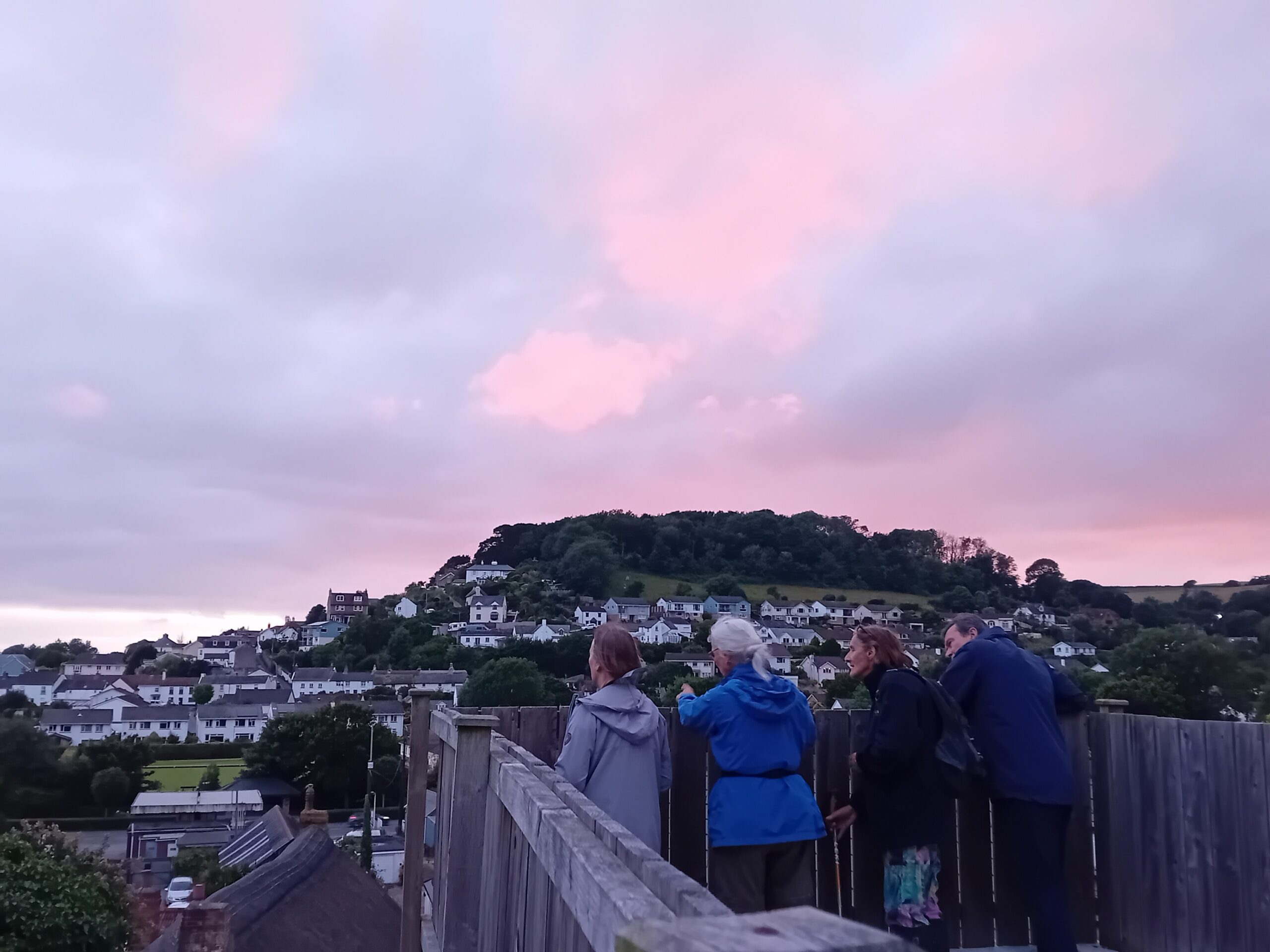
As the sun started to set, we stopped at another spectacular viewpoint to watch the sky change from vibrant pink to orange, but no further sign of swifts just yet! A little further down the road, our luck finally changed as we spotted five swifts soaring through the sky above a residential area. These impressive, acrobatic birds can fly up to 69 miles per hour! We could hear their iconic, high-pitched calls overhead.
Swifts are thought to be nesting in the roof of one of the houses on this residential street, so the group waited as night fell, in the hopes of seeing the swifts return to roost. Stood on the pavement beside a beautiful, fragrant patch of lavender, we quietly listened out for the call of the swifts. It was a magical way to end the walk.
We would like to thank Chris, Ann, and Vivien for sharing their knowledge, and to everyone who attended the swift events. We hope you feel inspired to support swifts in your area, and we can’t wait to hear about any new residents in your nest boxes!
If you have spotted swifts in Braunton, please contact Kerri via kerri@brauntoncountrysidecentre.org. Keep an eye on our Events Calendar for information about upcoming walks.
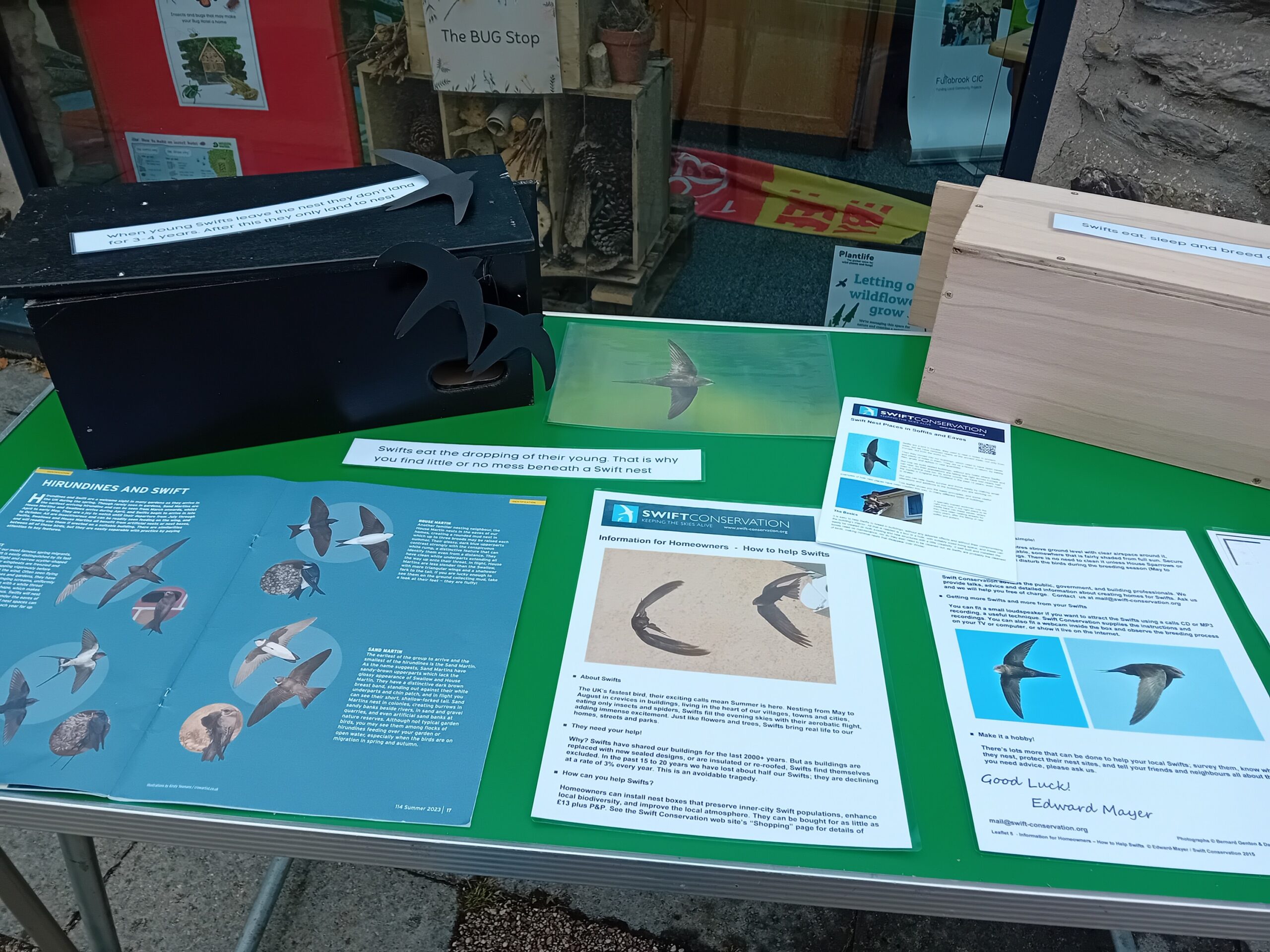
A few fun facts about swifts
- Swifts don’t start breeding until they are four years old
- On average, swifts live to be 7-8 years old, but they have been known to live for up to 20 years!
- Swifts only have one brood of 2-3 chicks
- They can be identified by their iconic anchor-like shape
- Swifts are social birds and live in colonies
- Parent swifts eat the droppings of their young!